My Intention

It has been a little while since my last post.  I am now another year older.  I traveled to Savannah for Thanksgiving with 2 small children (I’m not calling it vacation because it was a lot of work).  I’ve also been called “Clark Griswold” by my neighbors for my new strange obsession with putting up lights in the front yard. 

In this time, I’ve also learned a lot about my fitbit.  Did you know that a fitbit can confuse your elevated heart rate the morning after drinking with exercise?  It also confuses pushing a double stroller over cobblestone streets with bike riding.  If only it recognized toddler wrestling as the intense form of exercise that it truly is…

But dear readers, despite taking a short respite from FatGeriatrician.com, I have not taken a break from the gym!  

I’ve continued working out before the crack of dawn–hitting the gym at 5:00am at least 3 days a week for a month now.  Crazy, huh?  The 4:30am alarm is a harsh mistress.  

If you remember from post about spin class, I am motivated by the phrase, “remember your intention for doing this.”  

If you will indulge me a little, I will tell a tale of how I found my intention.

A few months ago I found myself in a candlelight kundalini yoga meditation class.   I know how that sounds–I’m not really a hippy-dippy, new age, weirdo.  But, I’d been a bit of a postpartum emotional mess, so I was trying new ways to calm myself down.   

The instructor wore all white, and had an almost cult-like happiness about her.  She took us through some brief stretches, and then we entered a 21 minute long meditation that was “for the heart and to gain clarity”.  She had us “set an intention” for the session.  I thought of my kids.  We chanted a mantra: 

Aad Guray Nameh
Jugaad Guray Nameh
Sat Guray Nameh
Siri Guru Dayvay Nameh

It meant something along the lines of “I bow to the wisdom within myself, the wisdom through the ages, the true wisdom, and the great unseen wisdom.”  This felt super weird at first.  I thought I might be getting punked.  But after the first 5 minutes or so, I stopped trying to sneakily open my eyes to see if it was a joke and everyone else was watching me be ridiculous, and I let myself get into it.  

The 21 minutes flew by, and part-way through tears just started streaming down my cheeks.  I wasn’t sure what was happening to me or why I was crying.  But then, the “remember your intention” went through my head again.  All of the sudden I could see my little boy’s smiling face.  Then it started slowly spinning.  It looked a little like this:

MY INTENTION

When the meditation session was over, I felt more calm and centered than I ever have.  I began to realize that my kids WERE my reason for pretty much everything now–and I needed to start being kind and gentle to myself so I could be kind and gentle with them.  

I’ve kept going to these weekly candlight meditation sessions.  And that smiling image has popped back into my head several times–usually when someone says something about “your intention.”  

I didn’t link “my intention” mental image from yoga to exercise until that fateful day at spin class when the instructor repeated “remember your intention for being here” like a mantra.  My sons smiling, spinning face continued to pop into my head, and I would tear up and pedal harder.  All of the sudden, I knew I needed to take charge of my physical health.  And I needed to do it so I can be present for my babies.  

Now when that 4:30 am alarm blares, I fight getting up for a few minutes, but eventually I remember my intention, swing my legs out of bed, and hit the gym.    

Q&A with a Geriatrician

I get asked a lot of questions about geriatrics. Most frequently I get, “what is a geriatrician,” and “when should someone see a geriatrician?” See my answer to these questions on seniorific.com!

Q. What is a Geriatrician?

A. Geriatricians are doctors trained in either Internal Medicine or Family Medicine who have spent at least one extra year training specifically to care for the needs of older adults.

Q. Why do I need a Geriatrician?

A. Geriatricians are experts in aging. We focus on the physical, mental health, and social issues that are unique to older adults. Most of our patients are over the age of 65, but age is not a requirement or a barrier for seeing a geriatrician. We are experts in complexity; most of our patients have multiple chronic diseases. As such, we often have longer appointments than most doctors and work with a team to care for our patients. We work hard to keep our patients as functional and independent as possible, and are experts in areas like falls prevention, cognitive changes/dementia, streamlining medication lists, physiologic changes in aging, and frailty.

Q. Aren’t Geriatricians doctors for old people?

A. Yes and no. Geriatricians are your partners in the medical community to fight ageism. A life well lived is constantly developing and changing. Just as pediatricians are experts at the developmental issues at the start of life, we geriatricians are the experts for those lucky enough to have made it past middle age and have the desire to continue to thrive. We are specialists in prevention of functional loss that many associate with “being old.” To do this well, we need to see you early—before you feel “old.” But don’t worry if you or a loved one didn’t see us before age related decline set in. When this time comes we are also experts in helping patients and families navigate the complexities of repeated hospitalizations and institutionalization in a respectful and dignified way that maximizes function and health.

Q. OK, you won me over. How do I find a Geriatrician?

A. There aren’t many geriatricians out there. To ensure your geriatrician has had rigorous training ask for a Board Certified Geriatrician. In the San Antonio area, veterans can contact the South Texas Veterans Health Care System at 210-617-5183 and ask to be seen in the Geriatric Evaluation and Management (GEM) Clinic at Audie L. Murphy Memorial Veterans Hospital. UT Health San Antonio also has geriatric clinics and may contact them at 210-450-910 or 210-450-9890.

Source: Q&A with a Geriatrician

Gee, I love technology

Today, I’m going to describe an unusual experience that occurred during my non-work life.

To do that I have to make an announcement.

I’ve given up on spinning.

bye spinning.png

Don’t worry. That doesn’t mean the blog is over. It just means that once I realized what the non-groupon price was per month at the spinning gym, I knew I didn’t want to become a member. For that price I could join a real gym…

So, I mustered up all of my courage (which has been greatly bolstered by the comments I have gotten from people here), and I joined a Golds Gym. Don’t worry, it has spin classes too–so I will likely have more follies and foibles to report later.

Gyms terrify me. They always have. If school had been about physical fitness and not mental fitness I would have ridden the short bus.

To help get over my fear, I enlisted a personal trainer. Something that wound up being more expensive than the spin gym, but I rationalized would help me learn to exercise “the right way” and without injury. Over time I will hopefully build the knowledge I need to go it alone and lose the shame.

Yesterday morning at 5am (yes, I’m still bonkers and getting up before dawn to exercise), I had my first real session with the trainer. Before we got started with the session, I had to get measured. Not with a tape measure and scale. Oh no–we are in the digital age, and tools for body shaming are way more advanced than that. We now have 3D body scans.

If you haven’t ever seen this, let me describe it for you. I was instructed to strip down to my sports bra and stand on a circular raised platform (luckily the trainer left the room so I didn’t have an audience for this). Once I got on the platform it began to spin. It took about 30 seconds to rotate before it dinged and told me to get off.

So there I was, more naked than I felt comfortable with at 5am in a foreign environment. I was rotating on a pedestal like some flabby carshow goddess while a machine took an insane amount of pictures so it could build a 3D model of my flab-u-locity.

I felt a little like this until I saw the pictures:

fantasia hippo gif

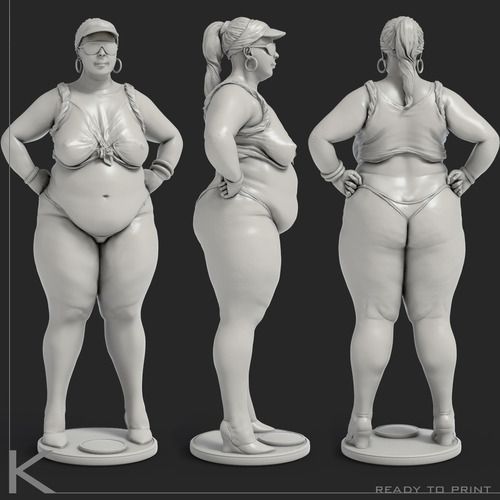
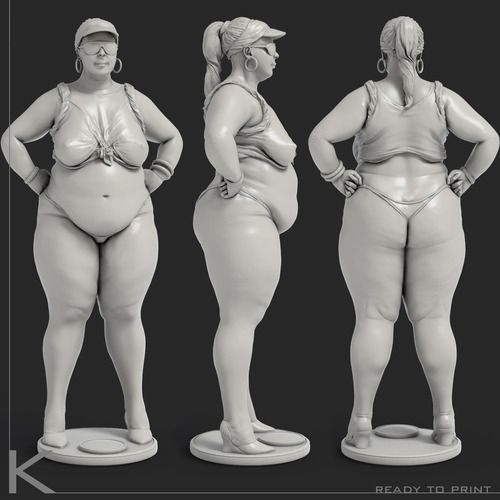
But in the end the 3D model looked a little more like this:

3D body scan

Okay–maybe I wasn’t being super sassy and wearing heals, a bikini, a visor, shades, and hoop earrings for the scan–but otherwise these pictures are eerily reminiscent of what I was shown.

What kind of cruel, crazy, futuristic world are we living in?

After the trauma of the 3D modeling of my body was over, I started my first workout with the trainer. She was part coach, part physical therapist, and part therapist. Just the combo this Fat Geriatrician needs.

And as I was walking out to go home, I ran into an woman in her 80s walking in. I must have looked like a safe friendly face, because we chatted for several minutes. She is there every morning. If she can do this, I can do this.

I think I’ll be going back tomorrow morning.

wink gif

5Ms and Hand Turkeys

Thanksgiving is just around the corner.  With 2 kids in daycare, that means one thing.  HAND TURKEYS!

Daycares LOVE making artwork using kids hands and feet.  Hearts made of footprints for Valentines Day and Christmas Trees made of handprints are cute.  But Thanksgiving is the holiday where hand artwork is King!

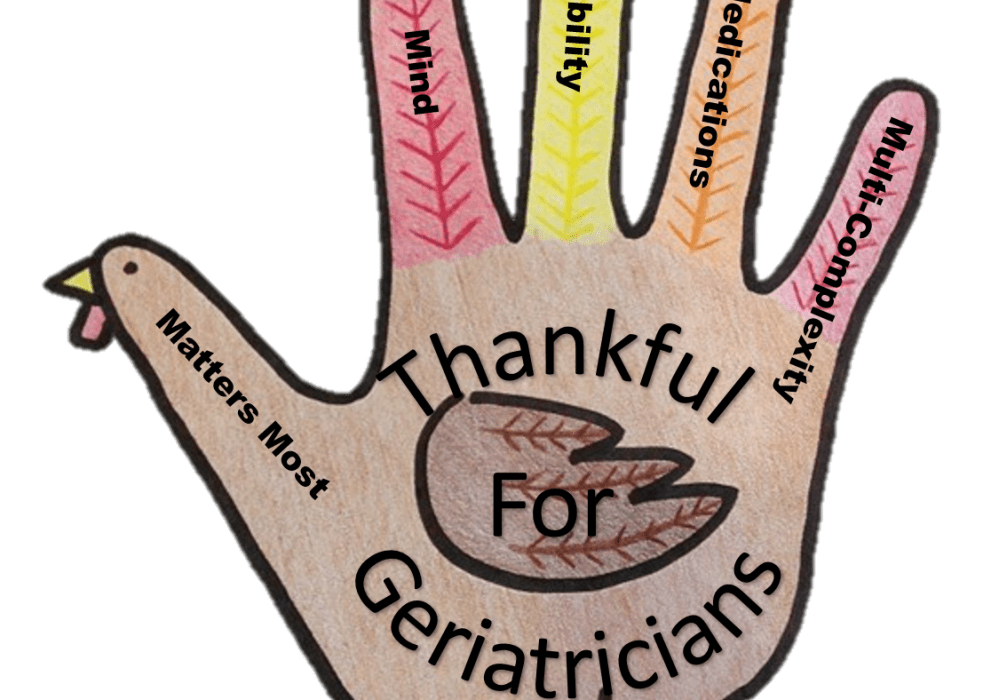
Seeing all the little handprints on display reminded me of a new “branding” campaign in Geriatrics–the 5Ms.

5Ms Geriatrics

It is an attempt to explain what geriatricians do in a simple and easy to remember way.  The words in the campaign are well thought out/on point.  However, what makes me chuckle is that the published visual representation is a hand turkey template?!?

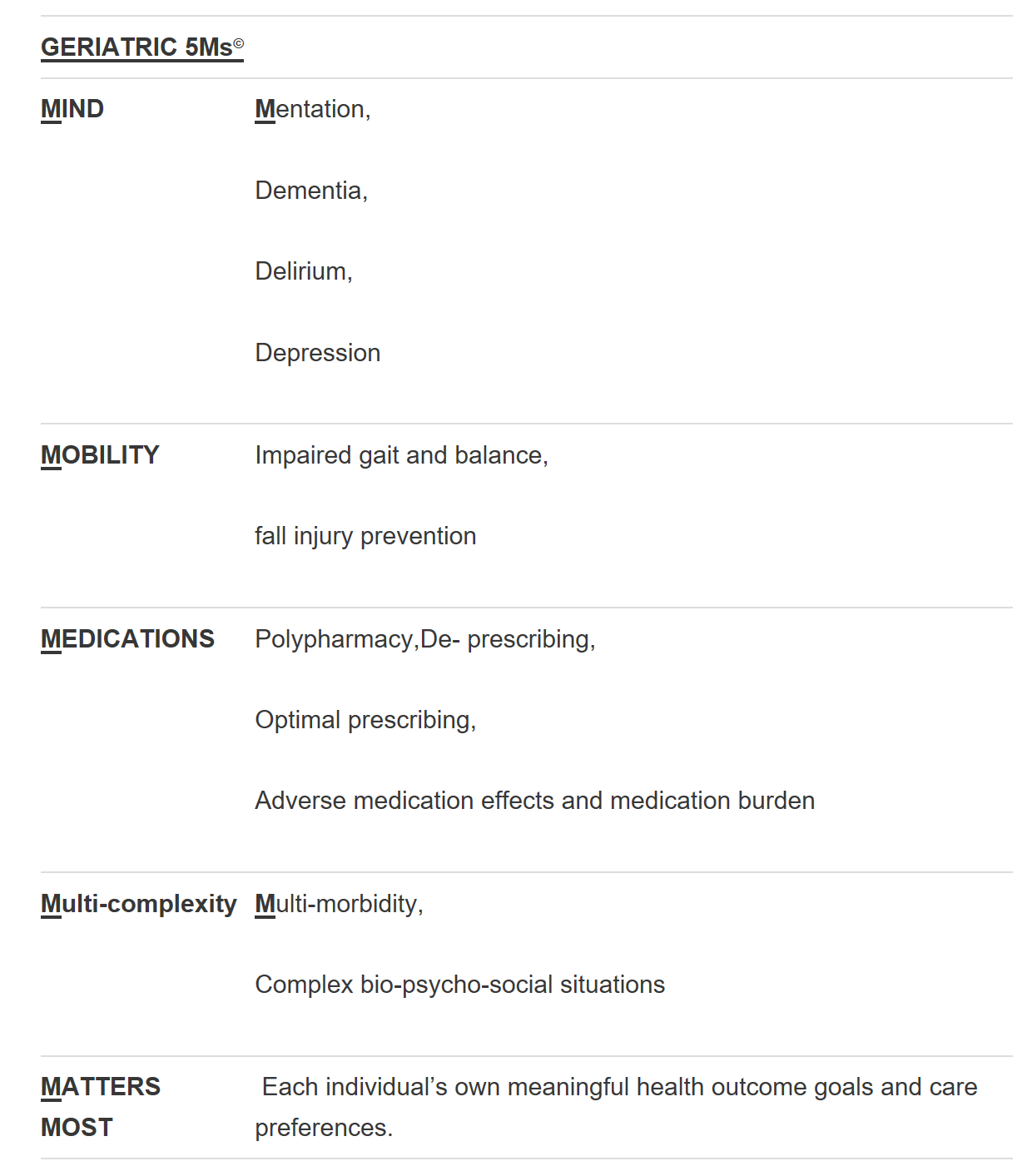
Descriptors of the different Ms can be found in the table below (lifted from this website).

5Ms table

I was unaware of this attempt at rebranding until a recent meeting where it was discussed like it was old news.  Whoops!  Bad on me for not paying attention.

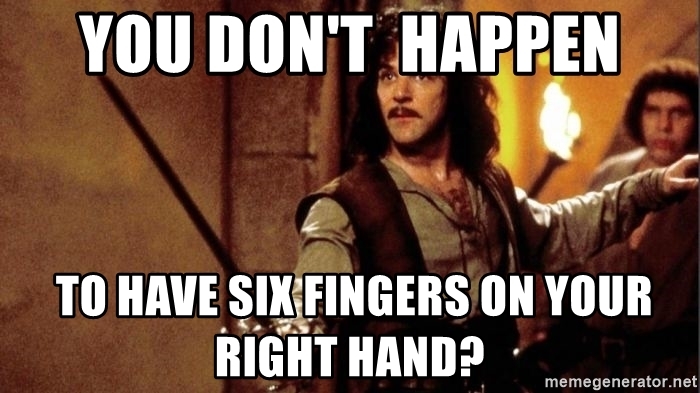
It may be captured somewhere under multi-complexity, but I think we are also experts at multi-locations of care. Hospital, clinic, home visits, nursing homes, PACE programs, hospital in home, etc. But then that would be a six-fingered turkey, and we didn’t kill Inego Montoya’s father…in fact we are all about NOT killing people’s fathers!

download_20181110_214437

Despite my somewhat joking tone, I do really like the 5Ms, and I need to find a way to incorporate them into my teaching.  They really do capture the essence of what we do as a specialty (and why we are different from internists and family med docs who also “see older adults”).

And hopefully, someone somewhere will be thankful for a geriatrician this Thanksgiving!

Thankfful for Geriatricians


I Heart Underdogs


Now that I have published my blog, I have been approached by several people saying, “Why Fat Geriatrician?  You aren’t Fat.”  First of all, thank you for reading the blog!  Second of all, thank you for your kindness–but I’ve got a BMI of 37.8.  Objectively and according to the WHO, I am “Severely Obese.”

So, here is my attempt at explaining why the name Fat Geriatrician appealed to me.

Fat and Old are dirty words in our culture.  We can still make fun of people who are fat and people who are old without really getting called out on it.  People assume that someone who is fat is also lazy, unhygienic, and dumb.  People assume that someone who is older is slow, feeble, and forgetful.

I see both groups as underdogs.  People fighting to be seen as who they are and not the label that society puts on them.  And boy let me tell you:

i_love_underdogs_keychain-r69b4d272432d436ba63dc67871cef88e_x7j3z_8byvr_307

In the past few years I have come to own and embrace my size.  I don’t care about it in a vain way.  Once I embraced shopping in plus sized stores, I started jazzing up my look.  I added dresses, bright colors, and makeup.  I have never felt more fabulous or self-confident.

The only thing that worries me about my size is possible health consequences and early functional losses due to being overweight–hence starting an exercise program (see my first post).

But many people who are fat are not able to embrace their size or practice self-love.  Being obese is often complexly intertwined with other psycho-social issues.

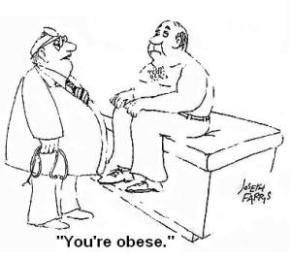
The healthcare system can be especially judgmental (beyond health concerns) of fat people.  We are (unfortunately) becoming a majority of patients.  Medical school teaches cultural competency and has made judging certain diseases taboo (ex. HIV, alcoholism, depression).  However, doctors can still openly judge and shame obese patients–and call it counseling.

I’m constantly getting the side-eye from other doctors (who don’t know me well) about my weight.  I was shamed by attendings for my weight during my training.  I’ve heard physicians and surgeons make snide comments about the weight of patients.  And believe it or not, I was interviewing a trainee for a spot in one of our university’s training programs and this person had the nerve to give the bodycheck/eyeroll/snide remark trio to me about my weight.  If this person did that in an interview, imagine what they would do to a vulnerable patient?

Despite popular opinion fat people are not dumb.  We are actually highly attuned to this kind of behavior (I can say this as a member of the fat tribe).

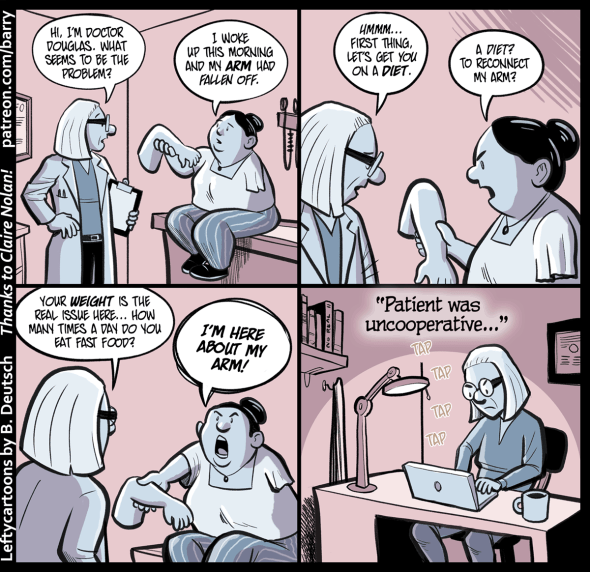
There is research on weight discrimination in healthcare.  It has been found that more than half of doctors describe their overweight patients as ugly, awkward, and noncompliant with treatment.  Nearly one quarter of nurses admitted to feeling repulsed by their obese patients.  Patients pick up on this and do not come back. My working hypothesis about “noncompliance” in many obese patients is that it has more to do with a poor doctor/patient alliance than anything intrinsic to the patient. 

patient was uncooperative

Hopefully I have convinced you that fat people are underdogs, especially in medicine.  Now let me convince you about old people.

One of the things I love the most about being a geriatrician is I get to work with a patient population who is not used to being seen or valued.  They are under-served, but not even on the healthcare system’s radar as being under-served because “50% of Hospital Length of Stay Days are for people age 65+.”  Access and appropriate care are not the same thing.

Anti-Ageism Rant:

Ageism is one of the only acceptable “-isms” left in America, and it is alive and well in the healthcare world.

I can’t tell you how many physicians have told me that they are experts in taking care of older adults (despite no training in aging) because they do it all the time?  The problem is they don’t do it well, and they don’t know it can be done better.  Older adults can also be ageist against themselves in a healthcare system–insisting that their symptoms are due to age.  They also rarely want to admit that they are older adults and that they could benefit from the expertise of someone in geriatrics.   We have a branding problem in our field.

One of my geriatric idols/attendings used to say “Older adults are the canaries in the coal mine for healthcare.”  He was so right.  As we age we become more vulnerable, and our fractured healthcare system that has been set-up for middle aged adults can be downright dangerous for older adults.  When something can go wrong in healthcare, it will go wrong for our older adult patients first.

canario

So I have embraced a career of taking care of these underdogs and their caregivers.  It is more fulfilling than you could ever imagine to see someone who has been told, “oh you are just wetting yourself/forgetful/falling/etc because you are old,” and then making them dry/think clearly/stop falling by practicing good geriatric medicine.  It is life changing for the patient, and brings me so much joy as a doctor.

I also love geriatrics because we fear weight loss.  It is a harbinger of functional loss and declining health.  So I got to stop having the uncomfortable you need to lose weight discussions with patients who weighed less than I did.  Instead I get to give the “you can ditch your low salt, low carb, low fat diet–just please eat,” talks!  They are much easier for me as a fat doctor.

youre obese

I think that being a fat “underdog,” and experiencing hidden prejudice in the healthcare system myself is a big part of what drew me to the field of geriatrics.  And therefore, it seemed very fitting to put these two ideas together in the name of my blog.

So there you have it!  Fat Geriatrician for the Win!